Holistic Health and Hormones: What My Own Body Taught Me
Understanding women's bodies holistically is one of the great joys of my life.
I could spend hours here. The way hormones, the nervous system, the gut, genetics, emotions and a woman's whole history are all talking to each other at once. It is the puzzle I will happily spend the rest of my life inside. My brain is a bridge connector, I am a little neuro-spicy, and once I see the pattern I cannot unsee it.
But I did not come to this as a fascination. I came to it through my own body, and through years of learning what it means to truly care for a woman as a whole person. Let me share some of that with you.
A bit of context first
There is a reason so many women feel unseen in their own health.
Women's bodies were left out of medical research for most of modern history. The serious push to include women in clinical trials did not arrive until the early 1990s, and the first large study following women through menopause did not launch until 1994. (but started with major fear mongering around HRT) Research focused on ADHD in women and girls was close to nonexistent until recent years.
That last one matters more than most people realize. The girls were always there; they were taught to hide, so they grew up masking and over-functioning and never quite switching off on the inside. Then perimenopause arrives, oestrogen drops, and the mask stops working. For so many women, that is the season they finally get a name for what was there all along. The world calls it a breakdown. I call it the body finally telling the truth.
I keep that context in the back of my mind with every woman I support. But the heart of how I work did not come from research. It came from living it.
Hormones do not live in a silo
Here is the pattern I cannot unsee. Nothing in a woman's body is happening in isolation.
Your hormones are not off in their own little room. Estrogen and progesterone are in constant conversation with your nervous system, your gut, your sleep, your mood and your stress response. When progesterone drops, the calm it gives you drops with it. When estrogen swings, inflammation and reactivity shift right along with it. Your genetics shape how you process every bit of it, and underneath the whole thing sits your stress and your history.
This is why looking at one symptom at a time keeps failing women. You are not a stack of separate problems. You are one connected ecosystem. We have to connect all the dots.
Coming home to my own body
I spent most of my childhood dissociated, living somewhere outside of my body instead of inside it, putting everyone else's expectations and versions of me ahead of my own.
There was a reason. My younger sister was born with Trisomy 18, spina bifida and a hole in her heart. She could not speak, feed herself or walk. My parents were in and out of the hospital caring for her, which meant I was shipped between caregivers, learning young that my value came from being helpful, easy and supportive. Underneath all of it ran a nervous system that never knew, on any given day, whether my sister would live or die. That is a particular kind of chronic stress for a child. You learn to read every room, anticipate every need and disappear your own.
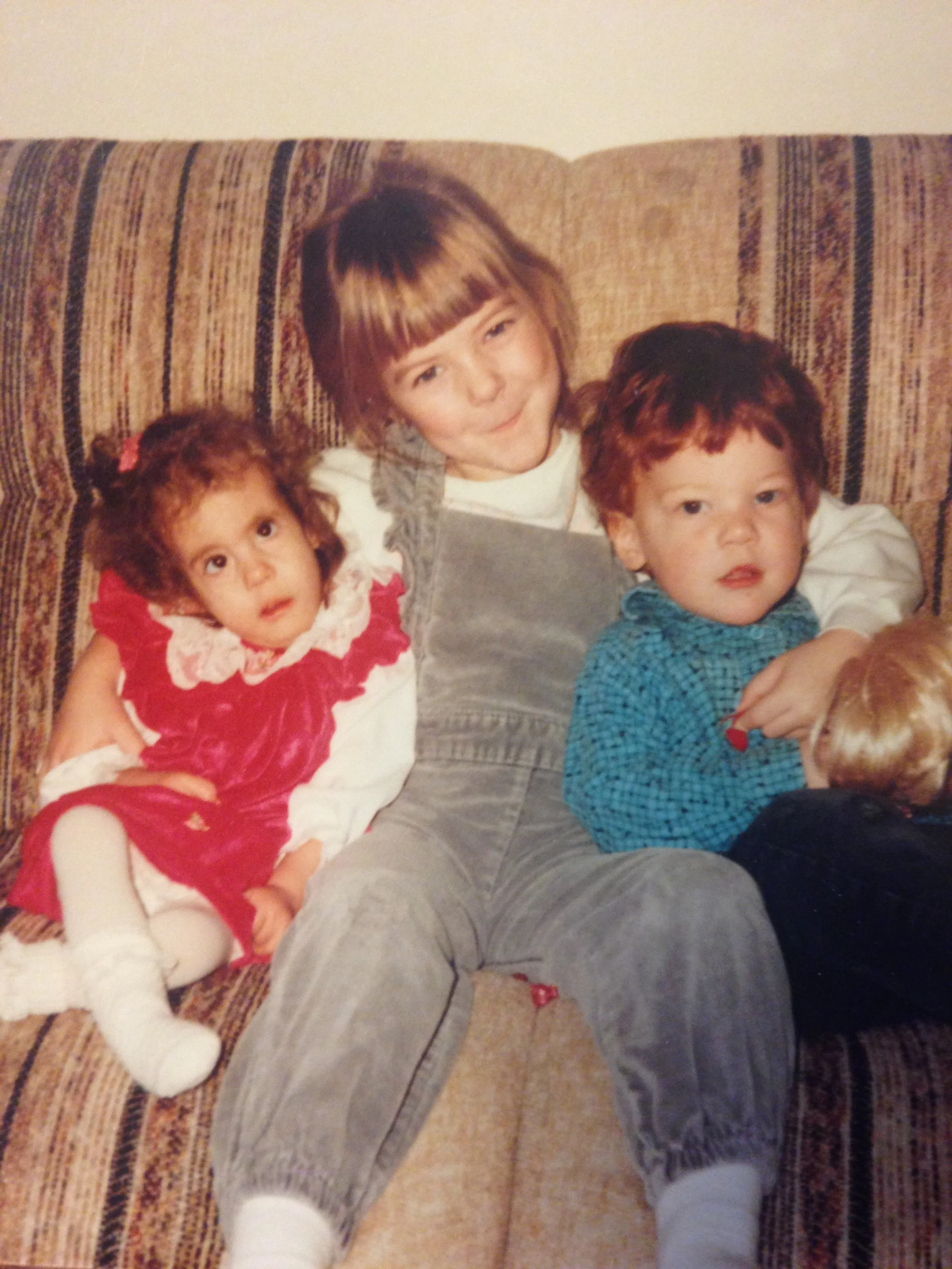
I also grew up in hospitals. I watched my sister's health rise and fall depending on the kind of support she was given, and I watched her get sent to an endless stream of specialists from the day she was born ( and my mom was taking her to all of them, no matter how full her schedule was) A different practitioner for every ailment, every system, every symptom. Not one of them ever stepped back to connect the dots and see her as a whole child. That is where my fascination with health, natural wellness and holistic living was born. I was a kid watching the medical system treat my sister in pieces, sensing even then that something was missing.
The same years, and all of those appointments, put my mom under relentless chronic stress through her twenties, thirties and deep into her forties. We were both surviving. Neither of us was living inside our bodies.
As an adult, I finally started to come back to myself. I went to counselling and then to coaching school. For the first time, I built a real relationship with my emotions and my mental health. I began to feel my body. I started to befriend it.
And here is the part nobody warns you about. The moment I felt safe enough in my own emotional world, my body turned on.
I had an autoimmune flare, set off by a combination of mold exposure, a car accident and a body that was, for the first time, no longer braced for impact. That sounds backwards until you understand the nervous system. For years my body had held it all together in pure survival mode. The moment it sensed it was finally safe, it let the truth come up. Sometimes that looks like a full health crisis. Mine did.
My doctor's answer was to send me to a string of specialists. She thought I had fibromyalgia. It was the same fragmented, one-piece-at-a-time approach I had watched my sister move through her whole life, and something in me already knew it would not reach the root.
Here is what I have come to understand about that label of fibromyalgia: it gets handed to so many women whose bodies are holding unexpressed emotion, stuck anger and stuck energy with nowhere to go. I am not dismissing the pain. The pain is real. What I am saying is that in my case, the root was not a mysterious disease. It was a lifetime of feeling I had pushed down, finally asking to be felt. My body was not broken. It was speaking.
And that crisis became one of my greatest teachers. It is what taught me to set boundaries. To say no. To care for myself from the body up, on a level I had never reached through my mind. So much of what was happening inside me was me learning, in real time, how to truly take care of myself.
I did not do it alone. I worked with a somatic therapist, an osteopath, a naturopath, a massage therapist, a womb healer, an energy clearer and neurofeedback. Every one of those pieces helped me come back to myself, and together they showed me the layers a woman is working on all at once. No single practitioner held the whole picture. The full picture only showed up when I stopped looking at myself one piece at a time.
Health became a true special interest of mine after that, and I started paying close attention to what genuinely helped.
One of those things, and I do not say this lightly, is the water I drink. I drink Lumi Vitae water, and it has helped me calm and regulate my nervous system, bring my inflammation down and let my body absorb the supplements I take instead of running them straight through me. It earned its place in my life and in the routines of many of my clients who drink it now as well. (One honest note, that is my affiliate link, so I earn a little if you order through it. I only ever share what I use and trust.)
My mom is the proof I come back to. She carried that chronic stress for decades. Now, in her mid-sixties, she is finally healing. I helped her sleep through the night for the first time since before my sister was born. I supported her through neck surgery. She came off all of her pharmaceuticals, and I built her a supplement protocol based on her genetics, paired with the Lumi Vitae water. Her body responded faster than anyone would expect at her age. The water is not the only reason, nothing ever is, but it has been a real part of it. Watching my mom come home to her own body, after everything, is something I will never take for granted.
I have also walked many of my clients through how to supplement from a holistic lens for the very things wearing them down, their mental health, their neurodivergence, and their perimenopause. It is not the centre of what I do. It is the bonus that comes from a woman who has lived it.
“Jennifer's” story
Theory only goes so far. Let me show you what this looks like in a real woman's life.
I will call her Jennifer, and I am keeping her anonymous, because her story belongs to her. In her thirties, Jennifer was diagnosed with cervical cancer. The treatment meant surgery to remove her reproductive organs, including her ovaries, and overnight, far ahead of any natural timeline, she was thrown into menopause. A young woman processing a cancer diagnosis, major surgery and the grief of losing her fertility, all at once, with her hormones dropping off a cliff in the same breath.
This is exactly where my holistic support matters.
Jennifer and I worked to bring it all together. She took what her doctors gave her, and we made sense of it together. We did the somatic work, slow and consistent, so her body had a safe place to process the trauma of the diagnosis and the surgery instead of carrying it alone. And I pointed her toward routes worth exploring with her medical team, including HRT, so she could make informed choices about her own body with real options in front of her.
She is befriending her body again. After everything it has carried, she is learning to trust it once more. And every single day, she is getting stronger and stronger.
That is holistic health and hormones in practice. The medicine and the body, the information and the integration, the doctor and the somatic work, all held together with the woman at the centre of it.
Pain and emotion are always in conversation
The longer I do this work, the more I see one truth underneath all of it. A woman who knows how to feel and express her emotions and a woman in physical pain are almost always connected. The body and the emotions are never having separate conversations. They are having the same one.
Here is the part that takes real discernment, and it runs both ways.
Sometimes what looks emotional is physical. I had a client working hard to move through her depression. We meditated, we did the therapy, we did the inner work. None of it was shifting. So we turned to her body instead. We adjusted her supplementation based on what her body was missing, and almost immediately, she felt relief. Her depression was not only a story to process. Part of it was biochemical. Her body needed support that her mind could never have talked her into.
And sometimes the opposite is true. There are women who spend years and a small fortune chasing the next supplement, the next protocol, the next quick fix, when what their body is asking for is to finally sit with the emotion they have been outrunning. No pill reaches grief that has never been felt.
Holistic health is knowing which one is which. It is the willingness to ask, in any given moment, is this body asking for something physical or is it asking to be felt. That question changes everything. When it is the emotional layer that needs tending, I walk women through my emotional release process.
How I hold all of this
Holistic health, to me, is the refusal to look at any one part of a woman in isolation. Everything is connected.
It is reading symptoms as messages, not malfunctions. It is understanding that the body keeps a record of everything it has lived through, and that real healing moves from the body up, not the head down. It is helping a woman gather her own information and her own team so she walks into every room as the authority on herself. Doctors, specialists and practitioners are part of her village and a good one is worth everything. But no one lives inside her body except her.
This is the part of my work that lights me up. It sits alongside everything else I do, and for the women I support, it changes the whole experience of being held.
Trust your body, because your body has all the wisdom. That is not a slogan to me. It is the thing my own body taught me the long way, and the thing I watch women rediscover over and over.
If you want to go deeper into the female body and start to connect the dots, I poured it into my free magazine, The Woman-Led Way.
And if you’re ready to work with someone who sees you as WHOLE and helps you as the individual find your aligned path to health, I’d love to support you. Book a free connection call today.
What might your body be trying to tell you, if you finally gave it the space to speak?
*This is my perspective and my lived experience, not medical advice. Work with practitioners you trust, and who treat you as a whole woman.